
Chinese Skinning Machine Efficiency: How Precision Equipment Transforms Processing
2026-05-23
In the world of meat processing, the efficiency of your skinning machine can make or break your production line. Chinese skinning machines are redefining speed and precision, but the real game-changer is how advanced design transforms raw throughput into perfectly trimmed results. At Worldbase, we’ve seen firsthand how the right equipment turns a tedious step into a competitive advantage—one clean cut at a time.
The Precision Edge: Rethinking Yield in Meat Processing
Meat processing has long been a game of balancing speed and accuracy, but the real frontier today lies in precision yield management. Traditional approaches often treat yield as a simple input-to-output ratio, glossing over the micro-decisions that cumulatively erode margins. Rethinking yield means scrutinizing every cut, every trim, and every gram of material flow with a level of granularity that turns minor adjustments into major gains. It’s not just about reducing waste—it’s about understanding the inherent variability of raw materials and dynamically adapting processing parameters in real time to extract maximum value from each carcass, primal, or trim piece.
Achieving this precision edge requires a shift from reactive measurement to proactive control. Instead of merely weighing outcomes at the end of the line, processors are now deploying in-line sensors, vision systems, and machine learning algorithms that predict optimal cutting paths and portion sizes before the blade ever touches meat. This intelligence allows for corrective actions on the fly, compensating for differences in fat cover, muscle density, or bone structure that would otherwise go unnoticed. The result is a production environment where yield optimization isn’t a periodic audit but a continuous, self-improving loop embedded directly into the equipment and workflows.
Beyond technology, a cultural reorientation is equally critical. Operators and engineers must be empowered to act on data, not just report it. When floor-level insights are combined with centralized analytics, the entire organization gains a shared language around yield performance. This democratization of information breaks down silos between procurement, processing, and sales, enabling a holistic view where every department understands how their decisions ripple through the value chain. Ultimately, precision in yield is not a one-time project but an evolving discipline—one that turns everyday variability into a competitive advantage rather than a tolerated loss.
Beyond Manual Methods: How Automation Redefines Skinning
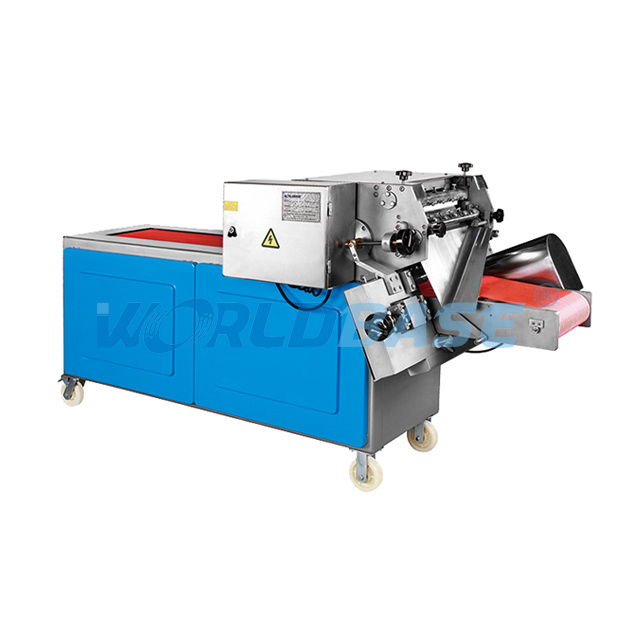
For years, skinning has been a painstaking manual craft, demanding hours of precise weight painting and vertex tweaking to achieve natural deformations. Artists would meticulously adjust influence maps, often frame by frame, to avoid collapsing joints or unnatural stretching. This slow, iterative process not only drained creative energy but also introduced inconsistencies across complex models. Automation steps in as a transformative force, turning what was once a bottleneck into a seamless, intelligent workflow.
Modern automated skinning tools analyze mesh topology and skeletal structure in seconds, generating weight distributions that rival hand-crafted results. By learning from vast datasets of articulated characters, these systems predict how geometry should bend and twist, drastically reducing the need for manual cleanup. The real shift lies in the freedom it grants artists—instead of wrestling with technical minutiae, they can focus on refining motion and expression, pushing the boundaries of character performance.
The redefinition goes beyond speed; it democratizes high-quality rigging. Small studios and solo creators now achieve results once reserved for large teams with dedicated rigging specialists. Automation handles base skinning with consistency, while still allowing artistic override where nuance is needed. This blend of efficiency and control is reshaping production pipelines, making the entire process more iterative and less fragile, ultimately delivering richer, more lifelike animation without the traditional overhead.
Inside the Mechanism: Engineering the Perfect Cut
The heart of any precision cutting tool lies in its ability to marry material science with motion control. Blades are not simply sharpened pieces of metal; they are tuned to specific frequencies that counteract vibration, reducing microscopic wobble that can fray edges. High-carbon steel alloys undergo cryogenic treatment to refine grain structure, while diamond-like coatings reduce friction without adding bulk. The result is a cutting surface that slides through materials with a consistency that feels almost telepathic to the operator.
Behind the blade, the drive system must deliver power in a way that never overpowers the material. Instead of brute force, modern mechanisms use torque-sensing feedback loops that adjust speed hundreds of times per second. When the blade meets resistance, the motor compensates instantly, maintaining a steady pace whether it’s slicing through soft fibers or dense composites. This silent conversation between sensor and actuator is what separates a rough chop from a surgically clean incision.
Geometry plays an equally critical role, often overlooked in favor of raw sharpness. The angle at which a blade meets the substrate, the micro-serrations hidden along its edge, and the relief behind the cutting bevel all influence how waste material curls away. Engineers spend countless hours studying chip formation, refining shapes that guide debris out of the kerf without jamming. It’s a ballet of precision where every curve and clearance angle has been tested to exhaustion, ensuring that the final cut requires minimal clean-up and leaves a surface that looks molded rather than severed.
Efficiency Unleashed: The Impact of Consistent Blade Control
Running a blade at a stable angle and speed isn't just a technical nicety—it's the quiet engine behind every clean cut and smooth operation. When the blade wavers, even slightly, the machine compensates in ways that burn energy and wear down components faster. Keeping that edge steady means less resistance, fewer passes, and a rhythm that turns raw effort into refined output. It's the difference between fighting the material and flowing through it.
On the factory floor, inconsistent blade control shows up as jagged edges, rework, and a creeping fatigue that drags on shift morale. Operators who master a consistent hand find that the blade does more of the work, letting them focus on precision rather than force. That consistency ripples outward—less scrap, tighter tolerances, and a production line that doesn't hiccup every time the density changes. The machine becomes an extension of intent, not a negotiation.
Beyond the immediate gains, reliable blade control preserves the life of the tool and the quality of the output over months, not just cycles. It removes the micro-adjustments that chip away at efficiency, allowing teams to trust the process and push throughput without second-guessing the equipment. That trust is what transforms a standard workday into a high-performance loop where every motion counts.
Transforming Throughput: Modern Skinning Solutions at Work
In high-volume processing environments, throughput isn't just a metric—it's the pulse of the operation. Legacy skinning equipment often limps along with frequent blade changes and inconsistent cuts, constraining output when demand surges. Modern skinning solutions tackle this head-on by integrating adaptive pressure controls and intelligent blade geometries that maintain peak precision across extended runs. The result is a dramatic reduction in downtime and a smooth, uninterrupted flow from infeed to packaging, turning what was once a bottleneck into a model of efficiency.
What truly sets today's systems apart is their ability to self-adjust to product variability. Instead of manual recalibrations for different fillet sizes or fat caps, sensors embedded in the skinning module read the product in real time and modify blade angle and depth on the fly. This means less waste from over-trimming and fewer stoppages for machine adjustments. When a line can pivot instantly from salmon to trout without missing a beat, the ripple effects on overall plant yield and labor allocation are impossible to ignore.
Ergonomics and hygiene have also undergone a quiet revolution. Quick-release components and toolless disassembly make end-of-shift sanitation a swift, thorough process rather than a time-draining chore. Workers are no longer wrestling with heavy guards or contorting to reach hidden corners, which reduces injury risk and boosts morale. When combined with predictive maintenance alerts that flag wear before failure, these advances mean that skinning lines stay in motion longer, delivering the kind of reliable throughput that transforms production targets from aspirational to routine.
The Future of Processing: Smart Skinning Technology
Processing lines are becoming more adaptive, and nowhere is this shift clearer than in the evolution of skinning equipment. Rather than relying on fixed blades and manual adjustments, newer systems embed sensor arrays that read the contours of each individual piece of product—whether it’s fish, poultry, or pork—and make micro-adjustments in real time. The result is a skinning process that preserves more yield without constant operator oversight, reducing both waste and downtime.
What sets smart skinning apart from conventional automation is its ability to learn from the materials it handles. Machine vision and pressure-sensitive feed mechanisms work together to distinguish between skin, fat, and meat layers with remarkable accuracy. Instead of a one-size-fits-all setting, the equipment builds a fleeting profile of each item and tailors the cut accordingly. This not only improves the consistency of the final product but also allows processors to handle a wider variety of raw materials on the same line without extensive reconfiguration.
Looking ahead, the integration of self-diagnosing components and cloud-based analytics will make these systems even more self-sufficient. Operators will receive predictive alerts about blade wear or calibration drift before they cause quality issues, turning maintenance from a scheduled chore into a just-in-time event. As labor challenges persist, such technology shifts the human role from repetitive adjustment to strategic oversight, making processing plants both leaner and more resilient.
FAQ
They combine advanced automation with tight tolerances that directly boost throughput. Instead of relying on manual skill, these machines use intelligent sensing to adjust blade pressure and depth in real time, which cuts waste and speeds up the line significantly.
It shifts the focus from constant adjustments to steady, predictable output. Operators spend less time recalibrating and more time overseeing smooth runs. The result is a quieter, more consistent workflow where defects drop and material yield improves noticeably.
Meat and fish processing are the obvious ones, where uniform thickness and minimal trim loss matter a lot. But leather tanning and even some textile finishing operations see gains, especially when they need to remove thin layers without damaging the underlying material.
Not really a trade-off, just a different rhythm. The components are built for endurance, and self-diagnostics flag wear early. Many shops find they replace blades less often because the automated control avoids over-stressing the cutting edges, so maintenance becomes more predictable.
Through adaptive feed systems and sensor arrays that map each piece before the blade touches it. The machine essentially reads the product and tailors the cut path, so odd shapes or tough spots are handled without manual intervention. This makes processing far less reliant on pre-sorting.
It’s the brain that coordinates speed, pressure, and cutting angle. Modern interfaces let operators set profiles or recall recipes instantly, and data logging helps trace quality dips back to source. This means continuous improvement isn’t guesswork — it’s driven by actual run data.
They’re typically designed with modular mounting and communication protocols that play nice with legacy conveyors and control systems. Retrofits are common, often taking less than a week, and the leap in efficiency usually justifies the brief downtime spent on integration.
Many operations see a return within 12 to 18 months when factoring in reduced give-away, lower labor hours per kg, and less rework. Some report payback in under a year if they were previously struggling with high waste and inconsistent output.
Conclusion
Modern Chinese skinning machines have reshaped meat processing by turning a traditionally labor-intensive step into a high-yield, precision-driven operation. The shift from manual trimming to automated systems directly answers the industry's call for better yield control and waste reduction. With blade precision and consistent pressure mechanisms, these machines remove skin cleanly while preserving valuable meat that would otherwise be lost to human error. This mechanical consistency isn't just about speed—it fundamentally rethinks how processors approach yield, enabling them to recover more product from each carcass. The engineering behind these systems, from adjustable blade heights to sensor-driven pressure regulation, ensures the perfect cut regardless of meat density or shape, effectively standardizing what was once an art form.
Beyond the immediate gains in precision, these machines transform overall throughput and operational dynamics. Automated skinning eliminates bottlenecks caused by fatigue or skill variations, allowing lines to run faster and more predictably. The consistent output also simplifies downstream tasks like portioning and packaging, creating a ripple effect across the plant floor. Looking ahead, smart technologies like real-time blade monitoring and adaptive cutting algorithms are pushing efficiency further. These innovations not only maintain peak performance but also predict maintenance needs, minimizing downtime. In the broader context of modern processing, Chinese skinning machine efficiency represents a convergence of mechanical innovation and practical design—delivering tangible results that redefine productivity standards while keeping quality at the forefront.
Contact Us
Contact Person: Mr Yang
Email: [email protected]
Tel/WhatsApp: +8613809083091
Website: https://en.worldbase.cn