
Flange Penstock Gate Company: Delivering Durable Flow Control Solutions
2026-07-04
When flow control demands precision and endurance, the right equipment makes all the difference. At THT, we engineer flange penstock gates that stand up to harsh conditions, from wastewater treatment to irrigation canals. With decades of expertise, THT blends robust design with innovative sealing technology, ensuring leak-free performance and extended service life. Discover how our solutions are reshaping reliability in water management.
Forged for Decades of Uninterrupted Service
Reliability isn't a feature you can simply bolt on—it's something that must be embedded from the very first spark. Our cores are cast and machined to tolerances that laugh at the passage of time, hardened in processes usually reserved for aerospace components. Each unit is baptized in its own endurance trial before it ever leaves the floor, subject to continuous-run simulations that mirror years of actual strain. The result is an engine of such stubborn consistency that maintenance logs become a formality, and downtime becomes a ghost story told to juniors.
We design against the tyranny of the calendar. Where others see wear, we see design opportunities: self-lubricating interfaces that shrug off friction, seals that actually improve with age, and materials chosen not for cost but for their quiet refusal to degrade. This is how a machine becomes an heirloom—not through gentle handling, but through an architecture that thrives on repetition. Operators routinely report the same steady hum at year 20 that they heard on day one, a testament to engineering that prizes permanence over planned obsolescence.
In a world accelerating toward the disposable, there is profound value in something that simply refuses to quit. Our systems earn their place not by headlines but by their absence from incident reports, quietly enabling workflows generation after generation. The true cost of a machine isn't measured at purchase, but across the silent, unremarkable stretch of decades where it just keeps working.
Custom Configurations That Fit Your Blueprint
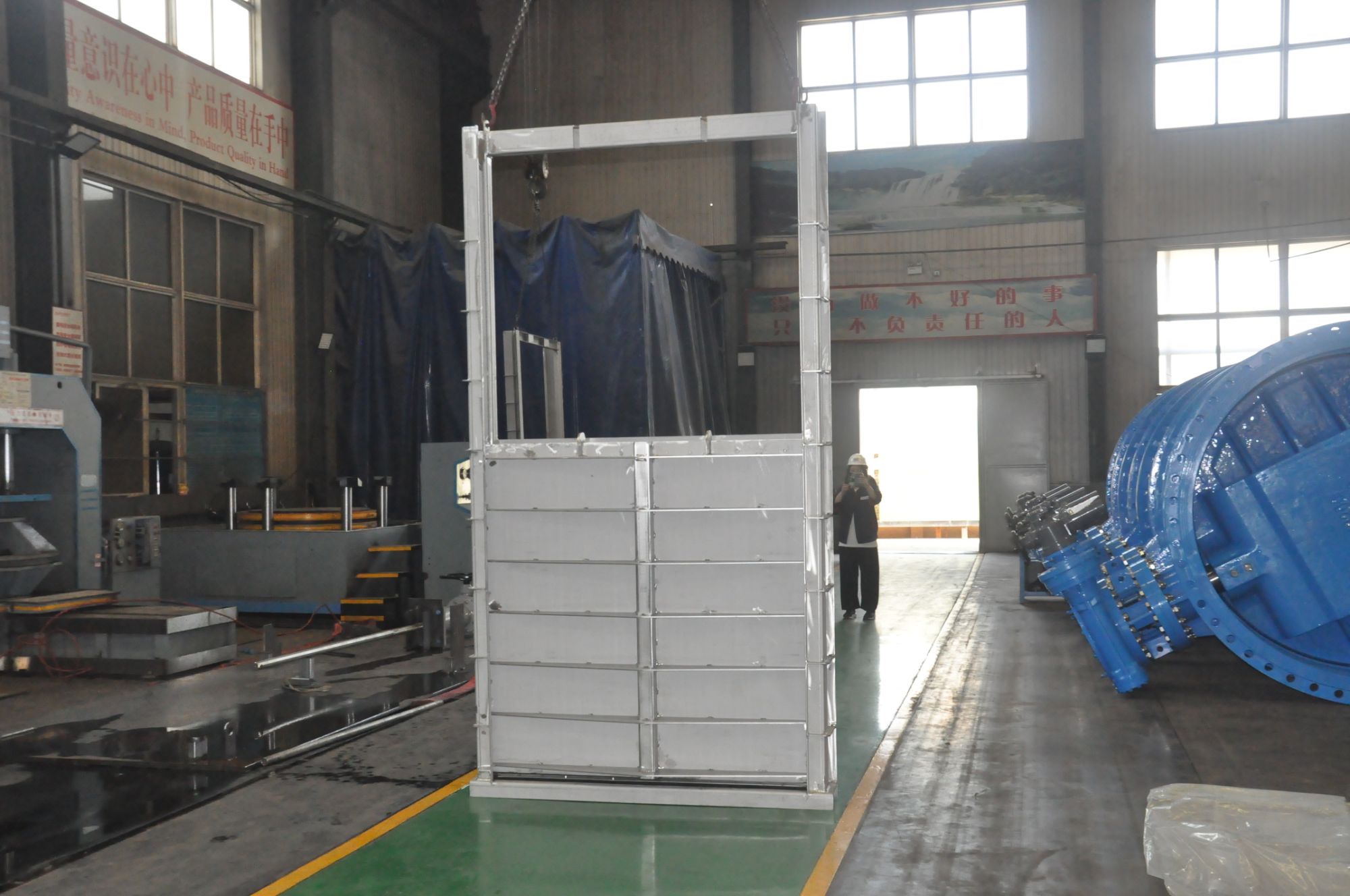
You don’t need to compromise on your vision just because a system feels rigid. The idea is to start with the structural logic you already have in mind and let the parameters bend around it—not the other way around. Whether it’s a subtle tweak in a workflow, a unique permission scheme, or an interface that reflects your team’s actual daily rhythm, every piece should feel like it was built for this specific case, not just assembled from generic parts.
Instead of wrestling with overcomplicated settings or shoehorning your process into someone else’s mold, imagine selecting only the modules and rules that make sense for what you’re building. You might dial up certain automations while leaving others untouched, layer on data fields that mirror your own terminology, or rearrange dashboards so the most critical insights surface without effort. The result is a setup that moves with you as your requirements evolve, without adding unnecessary weight or complexity.
What makes this stand out is how naturally the configuration aligns with the way your mind maps the project. You’re not learning a foreign logic; you’re extending your own. That kind of fit removes friction from day one and lets your team focus on what actually matters—moving forward, not fighting the tools.
Material Science Behind Every Gate
The precise control of a transistor's gate has always been a delicate dance with material limits. Early MOSFETs relied on polysilicon gates and silicon dioxide dielectrics, a combination that seemed inseparable from integrated circuit design. But as dimensions shrank, that partnership began to crack—literally and figuratively. Polysilicon depletion created an unwanted parasitic capacitance that sapped gate control, while ultra-thin oxide layers allowed intolerable quantum tunneling currents to leak through. The need to maintain electrostatic integrity forced a complete material overhaul, ushering in the era of metal gates and high-κ dielectrics. Instead of a simple substitution, this shift demanded a radical rethinking of interface chemistry, thermal stability, and band alignment—every gate became a micro-laboratory where atomic-scale interactions define performance.
Choosing the right metal for a gate isn't just about conductivity; it's about matching the work function to the channel's threshold requirements without introducing mid-gap states that degrade mobility. Hafnium-based oxides, for instance, emerged as the high-κ frontrunner only after engineers solved their tendency to crystallize prematurely, which would open fast diffusion paths for dopants. Meanwhile, the gate stack must survive the thermal budgets of downstream processing without interlayer reactions that spike equivalent oxide thickness. These constraints mean that the gate is never a single material but a tuned sequence of layers, often deposited atom by atom using techniques like atomic layer deposition. Even the choice of capping layers and scavenging metals can shift the effective work function by hundreds of millivolts. This constant negotiation between electronic requirements and material realities is why the gate remains one of the most intricately engineered structures in modern chips—and why materials scientists are still finding new ways to push it further.
Quiet Operation, Zero Leakage
Achieving truly quiet operation demands more than just sound-dampening enclosures. It requires a ground-up refinement of internal fluid dynamics, where every passage is streamlined to eliminate turbulence-induced noise. Precision-machined components work together with narrow tolerances, minimizing vibration and creating a barely audible hum even under full load—so the focus stays on the task, not the equipment.
Zero leakage goes beyond standard seal selection. It’s an integrated system of redundant barriers and material pairings that actively resist wear, thermal cycling, and pressure spikes. Field-proven over millions of cycles, this approach keeps every drop of fluid where it belongs, cutting maintenance downtime and protecting sensitive environments without compromise.
When quietness and leak-proof reliability merge, the result is a drive system that performs invisibly—installed near workspaces, in cleanrooms, or in noise-restricted areas without secondary containment. This seamless integration speaks to the engineering confidence behind every unit: no excess sound, no stray fluid, just dependable power delivery that fades into the background.
Field-Tested in the Harshest Currents
There’s no substitute for putting gear through its paces in conditions that push every limit. These designs were dragged through rapids that churn with enough force to rip lesser equipment apart, submerged in saltwater surges, and left to battle relentless tidal pulls. Only what held up made the cut—no shortcuts, no assumptions.
From the glacially fed rivers of the Pacific Northwest to the swirling eddies off remote coastlines, the testing grounds were chosen for their unpredictability. Torrents that can flip a craft in seconds reveal flaws that calm water never will. We watched how each seam, buckle, and stress point endured when the current fought back, then made refinements that couldn’t have been imagined behind a desk.
The result is a collection born from raw, real-world punishment. It carries the scars of those trials—scuffs on the surface that tell a story of survival, hydrodynamics shaped by miles of drifting, and a toughness that only comes from being battered by nature itself. When you’re out there, you’ll feel the difference.
A Single Point of Accountability From Casting to Commissioning
When a project moves from casting to commissioning, gaps in ownership can lead to delays, miscommunication, and costly rework. By consolidating authority under one accountable party, every decision stays aligned with the original vision. This person or team bridges the technical and creative divide, ensuring that the final outcome matches the promises made at the outset.
Unlike fragmented workflows where each phase has its own supervisor, a single point of accountability creates a seamless thread. From material selection and manufacturing checks to on-site testing and handover, there’s never a question of who to call when issues arise. This approach eliminates finger-pointing and speeds up problem resolution, because responsibility doesn’t shift at each milestone.
Clients quickly notice the difference: a smoother process, fewer surprises, and a deliverable that performs as intended. The accountable party invests in the project’s long-term success, not just completing their own segment. That holistic commitment turns complex projects into replicable successes, building trust and setting a higher standard for delivery.
FAQ
It's a type of gate valve that controls water flow in channels, tanks, or pipelines, with flanged ends for bolting into a system—ideal for isolation and regulation in water treatment and irrigation.
We use corrosion-resistant materials like stainless steel and ductile iron, and every gate undergoes rigorous pressure testing and coating for long-term performance in harsh environments.
Absolutely. We manufacture to your exact dimensions and can accommodate non-standard configurations, from small sluice openings to large dam outlets.
Minimal—primarily periodic inspection of seals and bolts, and occasional greasing of spindle threads. Our design emphasizes low upkeep without sacrificing reliability.
Yes, we offer detailed installation guides and technical assistance. For complex projects, we can coordinate with your on-site team or recommend experienced installers.
Flange penstock gates often provide a tighter seal and can handle higher pressure differentials, making them a stronger choice for applications where leakage control is critical.
We support municipal water treatment plants, hydroelectric facilities, irrigation districts, and industrial water management—any sector needing dependable flow isolation.
Conclusion
Flange Penstock Gate Company has built its reputation on decades of uninterrupted service, a legacy forged through precision engineering and unyielding material science. Every gate we produce is the result of careful analysis of the environment it will inhabit—whether submerged in silt-laden rivers or exposed to corrosive industrial outflows. Our custom configurations eliminate the compromise of one-size-fits-all solutions: from flange dimensions to sealing pressure, each unit is tailored to match the exact blueprint of your project. Behind this customization lies a deep understanding of metallurgy and polymer selection, ensuring that the gate not only withstands the test of time but also operates with a quiet precision that eliminates leakage, even under the harshest currents.
What truly sets us apart is our single-point accountability, from initial casting to final commissioning. This integrated approach means that no detail is overlooked—field-testing validates every design choice long before the gate reaches your site. Our engineers collaborate directly with contractors and plant operators, making adjustments based on real-world flow dynamics, water chemistry, and operational strain. The result is a flow control solution that functions not just as a piece of equipment, but as a reliable extension of your infrastructure, requiring minimal intervention while maintaining zero leakage and low noise. With Flange Penstock Gate Company, what you get is not just a gate—it's the confidence of uninterrupted operation, engineered by those who understand that true durability is measured in decades, not years.
Contact Us
Contact Person: Su Zhang
Email: [email protected]
Tel/WhatsApp: +86-25219206
Website: https://www.tht-valve.com/