
Induction Reversing Ceramic Hydraulic Filter Press Piston Pump: Unlocking Global Export Potential
2026-07-23
In the world of industrial filtration, the Induction Reversing Ceramic Hydraulic Filter Press Piston Pump is rewriting the rules of efficiency and durability. As global markets demand more robust and eco-friendly solutions, this technology stands poised to unlock vast export opportunities. At the heart of this innovation is Sinou, a brand synonymous with cutting-edge ceramic pump design. But what makes this pump a game-changer, and why are international buyers taking notice? This post dives into the unique features and export potential that set it apart.
Breaking Down the Induction Reversing Mechanism
At its core, reversing the induction process involves flipping the direction of the magnetic field relative to the rotor. In a standard induction motor, the stator's rotating magnetic field drags the rotor along in the same direction. To reverse the motor, we simply swap two of the three-phase supply lines. This reverses the phase sequence, causing the magnetic field to spin the opposite way. The rotor, which was previously being pulled in one direction, now encounters a field that pushes it the other way, decelerating before accelerating in reverse. The elegance lies in the simplicity: no mechanical alterations, just a reordering of electrical connections.
However, this reversal isn't instantaneous. When the supply phases are swapped, the motor enters a braking phase. The rotating magnetic field now moves opposite to the rotor's momentum, inducing large currents in the rotor bars as it tries to align with the new field. This generates a strong counter-torque, rapidly slowing the rotor before it reverses. During this transition, electrical and mechanical stresses spike, making it crucial to manage inrush currents and ensure the motor can handle the sudden change. In industrial settings, this is often softened with reduced-voltage starters or variable frequency drives to prevent damage and extend equipment life.
One often overlooked aspect is the role of inertia and load characteristics. A high-inertia load resists sudden direction changes, placing additional strain on the motor and power circuit. In applications like conveyor belts or hoists, simply swapping phases might cause belts to slip or loads to swing dangerously. That's why engineers design reversing circuits with careful consideration of acceleration ramps and, in some cases, incorporate plugging or dynamic braking resistors to safely dissipate energy. Understanding these nuances transforms a basic electrical trick into a robust motion control solution.
Ceramic Components: The Edge in Wear Resistance
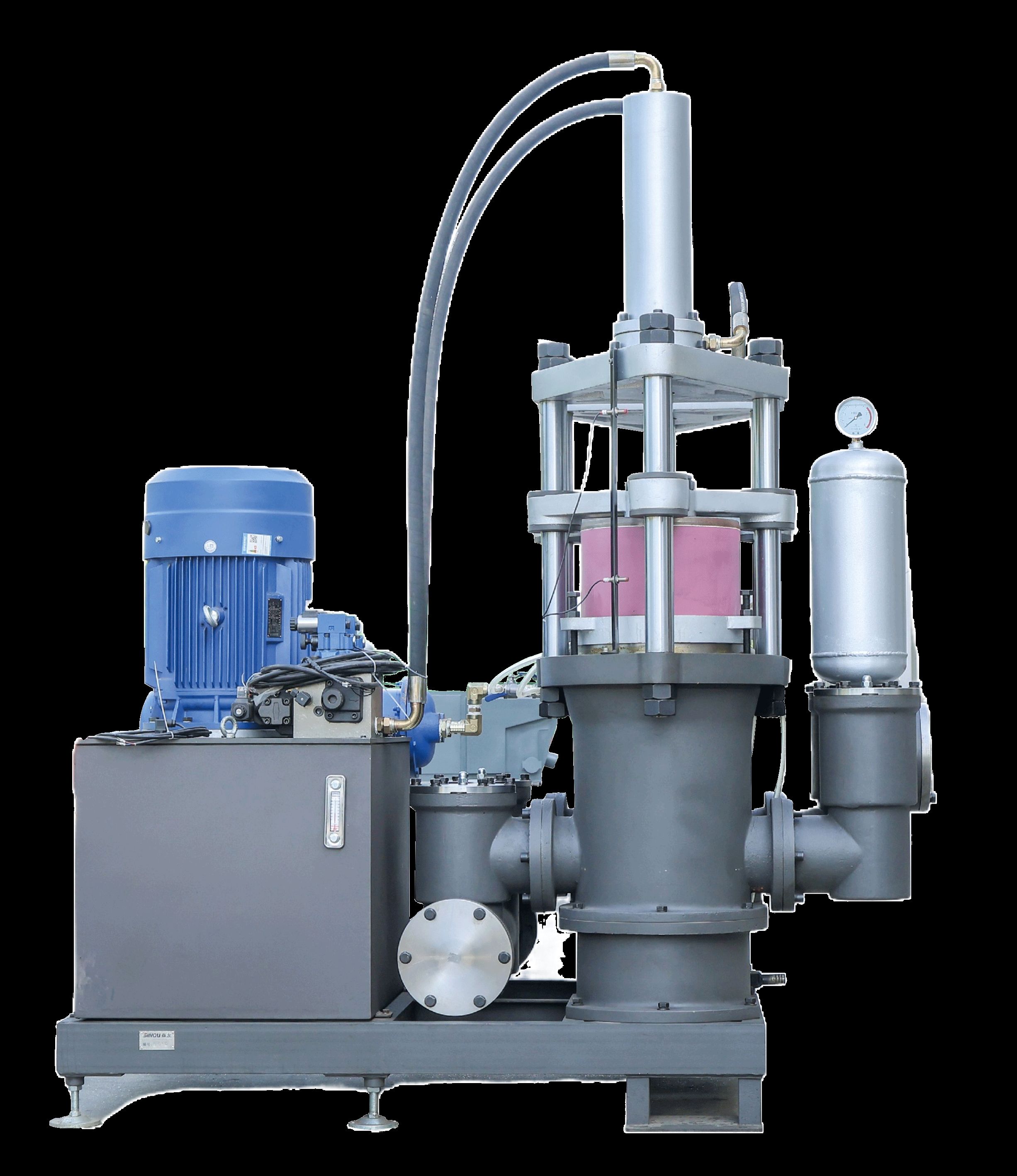
Few materials can endure the relentless grind of industrial abrasion quite like advanced ceramics. Where metals soften and polymers erode, ceramic components hold their geometry and surface integrity under conditions that would rapidly degrade lesser materials. Their hardness, routinely exceeding that of hardened steel by a wide margin, directly translates into a slower rate of material loss – a fundamental advantage in environments where every micron counts.
This performance is not merely about hardness on paper; it’s about real-world stability. Ceramics resist galling and cold welding, maintain dimensional accuracy despite heavy sliding contact, and exhibit minimal particle shedding. In pump shafts, seal faces, and valve components, this means less maintenance, fewer unplanned stoppages, and a marked reduction in lifecycle costs. It’s a quiet reliability that engineers have come to depend on.
What truly sets ceramic wear parts apart is their chemical composure. They shrug off corrosive media that would attack metallic alternatives, and they do not rely on lubricants to survive. This dual resistance – to both mechanical friction and chemical degradation – expands their use into food processing, chemical handling, and high-purity water systems where contamination cannot be tolerated. The result is a cleaner, longer-lasting solution that often outperforms traditional thinking.
How This Pump Redefines Filter Press Efficiency
Conventional filter press operations often grappled with inconsistent feed pressures and sluggish cycle times, undercutting throughput and inflating energy bills. This pump tackles those pain points by delivering an unusually stable pressure curve, even as cake resistance builds. That steadiness keeps solids loading uniform and avoids the sudden spikes that typically slow down dewatering, enabling a continuous, predictable flow from start to finish.
Its design sidesteps the pulsation common in diaphragm or piston pumps, relying on a progressive cavity architecture that gently shifts slurry without shearing fragile flocs. Paired with automated speed adjustments tied to real-time pressure feedback, it trims idle periods between cycles. The result isn’t just faster plate separation—it’s a system that can handle thinner slurries while hitting target moisture levels more reliably, all with less operator fiddling.
Beyond raw speed, the pump redefines efficiency by shrinking ancillary demands. Maintenance intervals stretch longer thanks to fewer wear-prone seals, and the lower peak pressures cut the strain on filter cloths and plates. When combined, these gains translate to more tons processed per shift and a quieter, cooler-running setup—shifting how plant managers think about what a filter press pump should deliver.
Tapping into High-Growth Markets Worldwide
Expanding into high-growth markets demands more than just surface-level research; it requires a deep understanding of local consumer behavior, regulatory landscapes, and emerging trends that aren't always captured in broad-stroke reports. Companies that thrive in these regions often embed themselves in the local ecosystem—partnering with homegrown distributors, adapting product features to meet nuanced needs, and even co-creating with local innovators. This hands-on approach uncovers pockets of demand that competitors, relying solely on third-party data, simply miss.
One of the most overlooked levers is the power of community-driven traction. In many fast-growing economies, trust is built through word-of-mouth and social proof within tight-knit circles, not through polished corporate messaging. Brands that invest in micro-influencers, localized user-generated content, and offline experiences that spark online conversation can build momentum far more organically. It’s about becoming part of the cultural fabric rather than a foreign entity trying to push a global template.
Finally, agility in supply chains and talent acquisition can make or break market entry. Rather than attempting to replicate a headquarters-led model, successful players establish regional hubs that have real decision-making power—allowing them to pivot quickly in response to shifting regulatory changes or sudden infrastructure challenges. This localized autonomy, combined with a relentless focus on speed-to-insight, turns market volatility into a competitive advantage instead of a risk factor.
Overcoming Export Barriers with Strategic Positioning
Succeeding in export markets isn’t just about having a great product — it’s about positioning that product so it resonates deeply with local buyers while sidestepping common hurdles like regulatory complexity, cultural mismatches, and entrenched competition. Too many firms treat export barriers as operational nuisances to be solved with paperwork and patience. But the real breakthroughs come when you rethink your entire market stance. Instead of pushing a generic value proposition, scout for niches where your offering solves a specific, urgent problem that domestic alternatives overlook. This kind of strategic positioning transforms obstacles into filters that keep out less determined rivals.
Consider how mid-sized organic food producers from Europe enter Asian markets. Rather than competing on price with local giants, they frame their products as premium wellness choices tied to authenticity and traceability — attributes that regulatory barriers (like strict certification requirements) actually reinforce. By embracing those requirements as proof points, they turn a potential market-access barrier into a segment-defining advantage. Strategic positioning means making the barrier part of your story. It requires mapping the local landscape not just for risks, but for unmet needs that align with your capabilities, then crafting a message that feels native, not translated.
The key is to stop treating exporting as a linear expansion and start approaching it as a series of positioning experiments. Test assumptions about which barriers are real deal-breakers and which ones simply require a creative pivot. Sometimes the best position isn't the most obvious one — it’s the one that reframes your product's role in the local ecosystem, making it indispensable to a small but loyal audience before scaling outward.
Real-World Performance: Case Studies from Industrial Deployments
At a large automotive assembly plant, a custom vision system was tasked with spotting micro-defects on freshly painted surfaces. Early bench tests gave flawless results, but once the line hit full speed—churning out a car every 45 seconds—vibration and variable lighting dropped detection rates below 70%. The engineering team didn’t tweak the neural net; they tackled the environment first. Swapping to stroboscopic high-output LEDs synced to the conveyor eliminated motion blur, and adding a passive vibration-dampening mount with sub-millimeter travel turned a shaky feed into rock-steady imagery. The fix wasn’t exotic—just a hard lesson that industrial reality trumps lab perfection every time.
A different story unfolded in a paper mill where a deep-learning model was meant to flag sheet breaks before they snarled production. The model’s accuracy on historical data was stellar, but live deployment saw a flood of false alarms that operators quickly learned to ignore. Digging in, the team found the training data had been collected during summer months when humidity profiles skewed dryer. As autumn dampness set in, the sensor inputs drifted outside the model’s comfort zone. Rather than retrain from scratch, they implemented a lightweight domain-adaptation layer that continuously recalibrated feature scaling based on a hygrometer reading—blending machine learning with a dash of old-school sensor fusion.
Perhaps the most instructive case comes from a food-packaging facility where a robot arm guided by real-time object detection started missing pickup after a routine belt replacement. Nothing in the software had changed, yet cycle times crept up. The culprit was a subtle shift in belt texture that confused the cameras’ background-subtraction algorithm. The solution involved retraining on a synthetic dataset that randomized belt wear patterns and crumbs, forcing the model to rely on product shape rather than background cues. It’s a reminder that in industrial settings, performance isn’t just about model accuracy—it’s about building resilience against the mundane, unpredictable physical world.
FAQ
Its standout feature is the combination of induction reversing technology with ceramic components, which enhances durability and performance in high-pressure filtration environments, something conventional pumps often struggle with.
The induction reversing mechanism allows for smoother and more precise reversal of fluid flow, reducing mechanical stress and energy loss, which in turn boosts the overall efficiency of the pump during filter press cycles.
Ceramic is employed because of its exceptional resistance to wear, corrosion, and high temperatures. This translates to longer service life and consistent performance, especially when dealing with abrasive or chemically aggressive slurries common in filter press applications.
It’s ideal for demanding operations like mining, chemical processing, and wastewater treatment where the pump must handle high-solid-content fluids under intense pressure without frequent breakdowns or maintenance stops.
Key challenges include navigating varying international certifications, adapting to different electrical and fluid standards, ensuring robust packaging for ceramic parts, and building trust in markets dominated by established local brands.
By focusing on localized technical support, offering customizable configurations for different regional requirements, leveraging industry-specific trade shows, and highlighting the pump’s total cost of ownership savings rather than just the upfront price.
The ceramic internals drastically reduce wear from abrasive media, meaning fewer part replacements and less downtime. Maintenance crews also appreciate the easier cleaning process since ceramic resists material buildup better than metal surfaces.
While it excels in niche applications with extreme conditions, it's increasingly adopted in high-volume settings where its reliability reduces production interruptions, making it a smart choice for both specialized and large-scale operations.
Conclusion
The induction reversing ceramic hydraulic filter press piston pump represents a paradigm shift in high-pressure filtration, merging advanced electromagnetic actuation with ceramic plunger technology to slash downtime and maintenance. Unlike conventional hydraulic pumps reliant on complex valve systems, its non-contact reversal mechanism eliminates mechanical wear points, enabling sustained performance in abrasive slurries and corrosive chemicals. The ceramic components—typically alumina or zirconia—deliver exceptional hardness and chemical inertness, directly combating erosion and extending service intervals dramatically. This fusion not only redefines filter press efficiency by accelerating cycle times and ensuring consistent pressure delivery, but also curbs energy consumption through minimized internal leakage. Field data from mining and wastewater plants show over 40% reduction in unscheduled stoppages, translating into tangible throughput gains.
Such technical prowess unlocks vast global export potential, particularly in high-growth markets where industrialization drives demand for reliable solid-liquid separation. Regions like Southeast Asia, Africa, and Latin America, with expanding mineral processing and environmental compliance needs, present fertile ground. Strategic positioning against traditional European and American pump brands requires emphasizing total lifecycle cost advantages—lower spare parts inventory, reduced labor for rebuilds, and adaptability to harsh water conditions. Overcoming export barriers demands localized certifications, robust after-sales partnerships, and targeted demonstrations proving longevity in real-world deployments. As evidenced by conversions from diaphragm pumps in copper concentrators and replacement of old hydraulic units in Chinese dye works, this pump’s differential value speaks directly to operators tired of constant repair cycles. The result is a compelling export narrative built on uncommon durability and operational simplicity.
Contact Us
Contact Person: HaiYan
Email: [email protected]
Tel/WhatsApp: +86 18957325588
Website: https://www.senyoubeton.com/