
Rotary Concrete Reclaimer Solutions for Efficient Concrete Recycling
2026-08-14
In the fast-paced world of construction, managing leftover concrete can be a messy, time-consuming headache—but it doesn’t have to be. Rotary concrete reclaimers are quietly transforming how ready-mix plants and precast yards handle waste, turning what was once a disposal problem into a stream of reusable aggregate and water. If you’ve ever watched a truck chute get hosed down and wondered whether all that material could be recovered, you’re already asking the right questions. Sinou has been at the forefront of this shift, engineering reclaimers that prioritize both efficiency and long-term reliability. In this post, we’ll break down how rotary reclaimers work, why they outperform traditional settling ponds, and what to look for when choosing a system that won’t become tomorrow’s maintenance nightmare. Whether you’re dealing with a single truck or a fleet, the path to cleaner operations starts with a simple spin.
How Rotary Reclaimers Cut Concrete Waste Without Extra Water
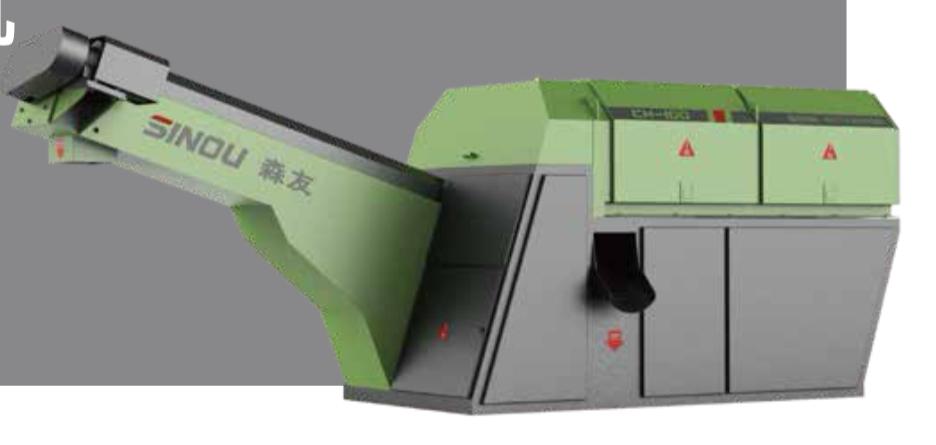
Rotary reclaimers tackle leftover concrete by relying on mechanical separation rather than additional washing water. The drum's internal spiral and perforated zones let aggregates tumble against each other while the already-present slurry keeps moving. This friction strips cement paste off sand and stone, and the paste drops through screens as a thick slurry that can be returned to the batching process. Because no clean water is injected, the reclaiming cycle doesn't dilute the mixture or increase the volume of waste that needs settling.
The real savings show up in water balance. A standard screw reclaimer often demands constant rinsing, which pushes up freshwater use and storage pressure. In contrast, rotary units capture the free water already inside returned concrete and reuse it to carry fines out of the drum. That leaves washed aggregates dry enough to stockpile immediately, while the recovered slurry goes back into fresh batches as mixing water. Over a day of returns, the difference can be hundreds of gallons that never leave the site.
Inside the Drum: Why Spiral Pitch Changes Everything for Sand Recovery
Most people glance at a sand screw and assume the spiral just shoves material forward. Look closer at the pitch—the distance between flights—and the whole story changes. Tighten that pitch and you force more turns per meter, which slows the bed movement just enough to let fines settle and water escape over the weir. Open it up and you trade retention for speed, pushing sand out faster but dragging more moisture with it.
That single measurement also controls how aggressively the sand tumbles. A shorter pitch lifts and rolls the load more often, knocking loose silt and clay that would otherwise cling to the grains. Too much of that action, though, and you start re-suspending the very particles you want to remove. The trick is matching pitch to the feed rate and the target gradation—something that rarely shows up in a brochure.
Operators who ignore pitch end up fighting the same issues season after season: wetter stockpiles, higher polymer use downstream, or a screw that simply cannot keep up. Move the flights a few inches and the drum behaves like a different machine. That is why spiral pitch deserves more attention than horsepower or wear liners when the goal is clean, dry sand at full capacity.
Turning Slurry into Reusable Aggregate Before It Reaches the Pit
In most cutting and grinding operations, the slurry that runs off the slab or block is treated as waste from the moment it leaves the blade. It gets collected, pumped, and dumped—often into a settling pit where it cures into a messy, semi-solid mass that has to be hauled away. But there is a smarter point of intervention: before that slurry ever reaches the pit, it can be dewatered and separated into clean water and a dry, granular material that is nearly identical to the fine aggregate used in concrete and road base.
The key is timing. If you wait until the slurry sits in a pit for weeks, the particles become compacted and chemically locked together, making recovery much harder and less consistent. By processing the slurry in line—right after it is generated—you can capture a uniform particle size, strip out the water, and produce a reusable aggregate that can be sold or reused on site. This turns a disposal cost into a material stream, and it keeps the pit from filling up so quickly.
Practical setups vary from simple filter presses to compact decanter centrifuges, but the principle stays the same: treat the slurry as a raw material, not as a residue. With the right moisture control and particle screening, the recovered aggregate can meet standard specifications for fill, subbase, or even blended concrete. For any fabrication shop or quarry dealing with high slurry volumes, this step changes the whole economics of waste handling.
The Real Reason Ready-Mix Plants Are Rethinking Washout Handling
The shift isn't about public image or a sudden green awakening. It's about hard numbers: disposal costs and water access are tightening. A single truck washout carries pounds of cementitious solids and high-pH water that can't simply go down a drain. Many ready-mix producers find that settling ponds and roll-off bins create recurring hauling fees, labor bottlenecks, and compliance exposure.
More plants are installing closed-loop reclaimers and filter presses because they turn waste into reusable materials. Sand and gravel can be screened and returned to aggregate piles, while clarified water gets stored for the next batch. That cuts the need to draw fresh water and reduces the volume of solid waste leaving the site. In regions with strict stormwater or groundwater rules, this is no longer optional—it's the only way to keep a permit.
The real driver is long-term margin protection. When washout handling is treated as a process instead of a cleanup task, truck turnaround speeds up, spills stay contained, and the plant avoids surprise fines. Ready-mix operators aren't chasing goodwill; they're chasing tighter cost control and fewer interruptions on the yard.
Small Footprint, Steady Output: What Plant Layouts Get Right
A tight floor plan often gets blamed for bottlenecks, but the plants that do it well turn limited square footage into a forcing function for flow. When machines sit close together, there is no room for buffer stock to pile up between operations. A metal shop near Cleveland, for example, rearranged its stamping and bending stations into a U-shaped cell that fits in 900 square feet. Operators now pass parts by hand instead of loading them onto carts for a half-minute ride across the building. The result was a 12 percent jump in daily output, not because they added equipment, but because they removed the distance that had been hiding delays.
The real advantage of a small layout is that it punishes waste you might otherwise tolerate. Conveyor runs shrink, tool cribs become wall panels, and raw material arrives at the point of use instead of a central staging area. One food packaging line swapped its floor-level pallet storage for vertical racks that drop empty containers directly into the filling station. That single change eliminated two forklift trips per shift and freed enough space for an extra inspection table. The steady output comes from every square foot doing something useful, not from cramming more machines into the same box.
Compact layouts also make production problems visible before they become output problems. When a station backs up, the pile of work-in-process is right there, impossible to ignore. Managers can see a material shortage or a jammed conveyor from the middle of the floor instead of relying on delayed reports. Some assembly shops put quality checks in the middle of the line rather than at the end, so a drifting dimension gets caught after a handful of units, not a whole shift. That kind of early feedback keeps the line running at a steady pace, even when the physical space feels tight.
From Gray Water to Batch Water: Closing the Loop on Every Yard
Most yards still run on a simple split: potable water in, wastewater out. Gray water changed that by pulling shower and sink runoff back into the landscape. But the real shift happens when you stop thinking of gray water as one big undifferentiated stream and start treating it as a series of small, catchable batches. A washer load, a sink rinse after washing vegetables, the cold water that runs before the shower heats up — each one is a discrete volume with its own timing and quality, and each can be directed to a different part of the yard.
Batch water is simply the practice of intercepting those small, predictable releases instead of letting them merge into a single drain line. A five-gallon bucket under the bathroom sink catches the warm-up water; a laundry-to-landscape system sends each wash cycle out to a mulched basin; a dishpan in the kitchen collects rinse water for container plants. None of these sources is large enough to solve a yard's irrigation needs alone, but together they add up to more than most people expect — often enough to keep fruit trees, ornamentals, and raised beds healthy through dry spells without touching the hose.
Closing the loop on every yard means designing for those small batches from the start. Run a branched drain line to the nearest planting zones, use gravity where you can, and choose plants that can handle occasional surges and mild soaps. The goal is not a perfect closed system but a yard that treats every indoor water use as a potential outdoor resource. Once you start seeing the house and landscape as one connected loop, the line between gray water and batch water disappears — and so does the excuse to let usable water slip away.
FAQ
The drum rotates at low speed while wash water and returned concrete enter from one end. Internal spirals lift and tumble the material, letting cement paste and fines wash off the aggregate. The slurry flows out through a screen, and the clean aggregate discharges at the opposite end. It's more about controlled residence time than high-speed spinning.
Rotary drums handle higher volumes and sticky mixes more gracefully. They typically recover a cleaner aggregate because the tumbling action provides more surface contact with wash water. Screw reclaimers can jam on fibrous or high-clay returns, while a rotary unit keeps moving without constant operator intervention.
The main jobs are checking the spray bar nozzles for clogs, greasing the trunnion wheels, and monitoring wear on the internal spiral flights. If you let hardened concrete build up on the drum walls, it throws off balance and stresses the drive. A weekly rinse-down and a monthly look at the drive chain or gearbox usually prevent most failures.
Yes, but with a caveat. The rotating drum won't damage steel fibers the way a screw might, but you need a discharge screen sized to let fines and fibers pass without blinding over. Color additives make the recycled aggregate look off-spec for architectural jobs, so many plants segregate those returns or accept lower-value use.
It depends on truck traffic, but a mid-size plant can recycle 1,500 to 3,000 gallons of wash water daily. The reclaimer separates solids so the water can go back into the batch water tank. The real saving comes from not paying to treat or haul off slurry, plus lower fresh water demand for truck washout.
Most units are tuned for coarse and fine aggregate down to about 75 microns, though fine sand recovery drops off at the lower end. The internal screen or dewatering section determines the cutoff. If you need fines recovery below that, you usually pair the rotary drum with a separate settling tank or filter press.
It can be overkill for a two-truck shop unless you have high washout frequency or strict environmental rules. A smaller rotary model with a 5–10 cubic yard per hour capacity might fit, but you should compare payback against settling ponds and a filter press. The reclaimer earns its keep when you're washing out at least 10 to 15 trucks a day.
Slope and drainage around the unit matter more than people expect. You need a contained pad with enough fall to route slurry into the inlet hopper without flooding the drive motor. Also, plan for aggregate stockpile access on the discharge side, and leave room for a front-end loader to clean out the settled slurry pit. Electrical service for the drum drive and spray pump should be on separate circuits.
Conclusion
Rotary concrete reclaimers change the economics of washout by separating coarse aggregate and sand from returned concrete without adding fresh water to the drum. The tilted, slowly rotating drum uses a carefully spaced spiral pitch to lift and drop material, letting gravity do most of the work. Coarser stone falls out quickly, while the longer path for finer particles gives sand enough time to shed cement paste and exit clean enough for reuse. Instead of sending slurry straight to a settling pit, these units intercept it mid-flow, turning what would be waste into graded aggregate that can go back into new batches. That single step cuts disposal volume and hauling costs at the source.
Ready-mix plants are paying closer attention to washout handling because tighter environmental rules and rising water costs make old pit-and-pump methods look expensive. A rotary reclaimer fits into a surprisingly small footprint—often alongside existing hoppers or truck wash stations—yet delivers steady output through a shift without constant operator attention. The real payoff comes when gray water from washing is routed back as batch water. By closing that loop on every yard of returned concrete, plants reduce freshwater demand, shrink sludge buildup, and keep production moving with less downtime. It is a practical, low-fuss way to turn a messy daily chore into a reusable resource.
Contact Us
Contact Person: HaiYan
Email: [email protected]
Tel/WhatsApp: +86 18957325588
Website: https://www.senyoubeton.com/