
Spiral Freezer Recommendations: Choosing the Right Model for Your Business
2026-05-09
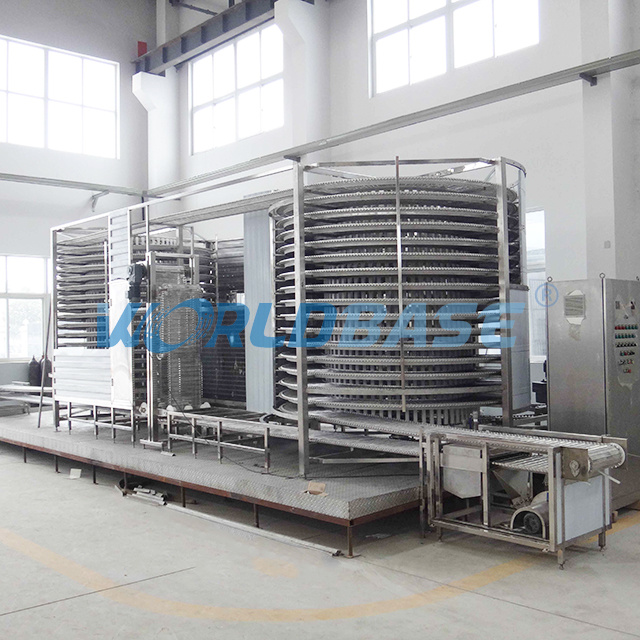
Selecting the ideal spiral freezer can make or break your production line. With freezing capacities, footprints, and airflow designs varying widely, it’s easy to get lost in the technical maze. At Worldbase, we see too many businesses overspending on oversized systems or outgrowing an undersized unit within months. Instead of generic specs, what you really need is a clear-eyed look at how throughput, product characteristics, and future growth intersect. In this guide, we strip away the guesswork and lay out practical recommendations that match real operational demands, so your next spiral freezer becomes a long-term asset, not a bottleneck.
Pinpointing Your Production Needs Before You Buy
It’s tempting to dive right into catalogs and spec sheets, but the real groundwork happens when you step back and scrutinize your daily workflow. Look at the bottlenecks that slow your team down, the tasks that eat up hours, and the moments where quality dips. These pain points aren’t just annoyances—they’re clues about what you actually need from new equipment. Instead of fixating on horsepower or speed numbers, map out how a machine would slot into your existing processes. Will it genuinely unclog a persistent jam, or just add another layer of complexity? Being honest here saves you from expensive missteps later.
Talk with the people who will use the tools every day. They often know quirks and workarounds that never show up in management reports. Maybe your crew has been compensating for a machine that’s constantly misaligned, or they’ve jury-rigged fixes that a new purchase should render obsolete. Listen for the small frustrations—the three extra steps to swap materials, the hour wasted on warmup each morning. These details clarify what features matter, like quick changeover or energy efficiency, rather than flashy add-ons you’ll never touch. Sometimes the smartest buy is the one that eliminates these subtle time thieves, not the one with the most impressive brochure.
Finally, think beyond today’s orders. Where is your business heading in the next two to three years? Buying strictly for current demand can corner you when product lines shift or volumes jump. Consider flexibility: can the equipment handle a wider range of materials or scale up without a complete overhaul? It’s less about predicting the future perfectly and more about avoiding a purchase that becomes a constraint. Balance your immediate pain points with a sensible eye on what’s coming, and you’ll end up with a solution that stays useful long after the initial excitement fades.
Why Energy Consumption Deserves a Closer Look
Most discussions about energy use revolve around cost or environmental slogans, but the real story is more nuanced. Our daily consumption patterns shape infrastructure decisions that lock in waste for decades. A poorly insulated home or inefficient transit system doesn't just raise bills—it commits future generations to higher energy demand, regardless of how much awareness grows. It's a slow-moving architectural trap we rarely notice until options have narrowed.
Beyond the household, energy consumption acts as a silent multiplier of inequality. In regions without reliable grids, families resort to diesel generators that consume fuel inefficiently and emit harmful byproducts inside living spaces. Meanwhile, cutting-edge efficiency technologies remain out of reach for those who need them most. This gap isn't merely about access; it's about the compound disadvantage of spending more time and income on basic energy needs while others automate and advance.
Health impacts are another overlooked dimension. The combustion that powers our lives releases more than carbon dioxide—it's a cocktail of particulates and nitrogen oxides that researchers now link to cognitive decline over long-term exposure. Children in areas with outdated energy infrastructure show measurably lower lung development. Shifting the focus from abstract emission targets to tangible local health outcomes might finally provide the personal motivation that grand climate goals have failed to inspire.
Aligning Freezer Capacity With Future Expansion
Planning your cold storage strategy requires looking beyond current demand. A common pitfall is underestimating how quickly product lines evolve or seasonal peaks intensify. By designing freezer layouts with flexibility in mind, you avoid disruptive retrofits and maintain seamless operations as your business scales.
Investing in modular racking systems and adjustable temperature zones can transform a static facility into a responsive asset. This approach not only protects your initial investment but also reduces long-term capital expenditure. It’s about building a foundation that grows alongside your ambitions, without letting frozen capacity become a bottleneck.
Collaborating with operations teams to map out a three- to five-year growth forecast ensures that expansion plans are grounded in real data. Simple steps like leaving designated space for additional blast freezers or wider aisles can future-proof your layout, saving costly redesigns and downtime when the next growth phase kicks in.
Navigating Tight Spaces With a Smarter Layout
Moving through cramped quarters often feels like solving a puzzle where every step counts. The key lies not in wishing for more square footage, but in rethinking how every inch connects. A layout that prioritizes flow over filler can turn a suffocating room into a space that breathes, letting you glide from one zone to the next without that constant shoulder-brushing frustration.
Smart layouts thrive on purposeful placement. Think about it: mounting shelves at eye level frees floor space, while nesting tables that tuck away when not in use keep pathways open. Even something as simple as angling a sofa away from the wall can redirect traffic and carve out subtle boundaries without erecting barriers. It’s about designing pathways that feel intuitive rather than forced.
The payoff goes beyond mere convenience. When your surroundings finally match your rhythm, the mental static quiets down. No more sidestepping furniture or contorting around awkward corners—just a calm, capable environment where everything has its place and you can actually live comfortably, not just exist compactly.
Maintenance Realities That Shape Long-Term Costs
Overlooking routine maintenance is easy when budgets are tight, but the hidden price tag of deferred care often dwarfs the upfront savings. A worn belt left unchecked can snap without warning, taking out a compressor, bending valves, and sidelining production for days. Those emergency repairs don't just cost more in parts and labor; they ripple outward in lost revenue, expedited shipping fees, and the overtime hours needed to get back on track. What's quietly unfolding is a cycle where short-term decisions quietly lock in much larger long-term expenses.
It's the less obvious realities that really shape ownership costs over time. Lubrication schedules might seem trivial, but dirty or degraded oil accelerates wear deep inside components that are expensive to reach. Thermal cycling from undersized cooling systems can crack heat exchangers years before their rated life. Even the seemingly simple act of retorquing fasteners after a break-in period is skipped so often that joint leaks become a normal—and costly—expectation. These aren't design flaws; they're the predictable consequences of operating assumptions that drifted away from what the equipment actually needs.
Another reality is how maintenance data gets used—or ignored. Many facilities collect work orders without ever analyzing the patterns, which means they miss the chance to spot repeat failures early. A motor that's realigned three times in two years isn't just a nuisance; it's a sign of a soft foot condition, a bent shaft, or perhaps a resonance problem that will eventually destroy the bearings and coupling. When that data stays buried, the organization ends up funding the same corrective work repeatedly instead of addressing the root cause, transforming what could have been a manageable fixed cost into a runaway operational drain.
Customization Choices That Make a Real Difference
Not all customization is created equal. The options that truly matter are the ones that adapt to how you actually work, not how a designer imagines you might. Think of interfaces that let you surface the tools you use daily and hide the ones you don’t, or layouts that rearrange themselves based on the time of day and the task at hand. When choices feel personal rather than cosmetic, they stop being a feature and start becoming part of your routine.
There's a quiet power in settings that remember more than just your preferences—they remember your patterns. A dashboard that learns which metrics you check first thing in the morning, or a notification system that knows when you’d rather be left alone, makes a tangible difference. These touches aren’t flashy, but they remove friction in ways that genuinely lighten mental load, making the tool feel like an extension of your intent.
What separates meaningful customization from gimmicks is restraint. The best options are often the ones that let you subtract rather than add—streamlining workflows, reducing visual noise, and letting you lock in a setup that stays out of your way. When done right, customization doesn’t require constant tweaking; it settles into a background hum of efficiency, letting you focus on what you’re actually trying to accomplish.
FAQ
Capacity hinges on production throughput, product dimensions, and required dwell time. You'll want to match the freezer's belt width and tier count to your peak hourly output while leaving room for growth. For example, a bakery running 2,000 kg of par-baked bread per hour needs a wider belt and more tiers than a small seafood plant freezing 500 kg of shrimp.
Delicate items like berries or coated appetizers require gentle airflow to avoid damage, so you'd lean toward a low-velocity, high-volume design. Heavier, dense products such as meat patties or ready meals can handle impingement-style airflow for faster freezing, which might let you choose a more compact system with the same output.
Self-stacking belts eliminate the need for rails and supports, packing more belt length into a tighter circle. That's a lifesaver in plants with limited floor space. A traditional spiral often needs a larger diameter for the same belt length, but it can be easier to clean and maintain if you have the room.
The system's compressor type and refrigerant dictate energy efficiency and temperature pull-down speed. Ammonia-based systems often deliver lower long-term costs for high-capacity lines, while CO2 transcritical setups are gaining ground for smaller, environmentally conscious operations. Don't overlook defrost cycles—a hot gas defrost can slash downtime compared to electric elements.
It's not just the purchase price—factor in energy consumption, sanitation labor, belt replacement intervals, and downtime penalties. A model with a CIP system might cost more upfront but pay for itself within two years through reduced cleaning hours and water usage. Always request utility projections from manufacturers for your specific product and location.
Look for fully welded interiors, sloped floors with no hiding spots, and automated belt washing that reaches every tier. If the design includes open-frame construction, make sure it's paired with easy-access panels and doesn't trap debris. Some newer models even offer antimicrobial belt materials and UV-C lighting as add-ons for high-risk zones.
If your process calls for more than just freezing—say, crust freezing before a sauce coating and then deep freezing—a dual-zone model with independent temperature and air control in each section keeps your line flowing without an extra machine. It's a smart move for coated poultry or pastry products where surface texture matters.
Conclusion
Selecting the ideal spiral freezer starts with a granular assessment of your production realities. Honest evaluation of current throughput, product characteristics, and peak demand patterns prevents costly over-specification or crippling under-capacity. Far too often, businesses fixate on sticker price while overlooking the compounding impact of energy draw; modern high-efficiency coils, optimized airflow, and variable-speed drives can slash operational costs dramatically. Smart buyers also stress-test capacity projections—a unit that merely meets today’s volumes will suffocate growth, yet modular designs or expandable belt stacks can future-proof the investment without needless upfront spend. And in facilities where square footage is at a premium, innovative vertical configurations and compact footprints squeeze maximum output from minimal real estate.
Beyond the spec sheet, long-term ownership costs are quietly shaped by maintenance realities. A freezer built with accessible components, self-cleaning features, and robust sanitary design reduces downtime and extends service life. Customization often provides the decisive edge: whether it’s tailored belt materials for sticky doughs, specialized airflow for delicate products, or integration with existing line controls, small adjustments yield outsized reliability gains. The right choice isn’t the most feature-laden model—it’s the one whose engineering aligns precisely with both your immediate production pains and your long-term vision, backed by a manufacturer that treats configuration as a collaborative process, not a checkbox exercise.
Contact Us
Contact Person: Mr Yang
Email: [email protected]
Tel/WhatsApp: +8613809083091
Website: https://en.worldbase.cn